
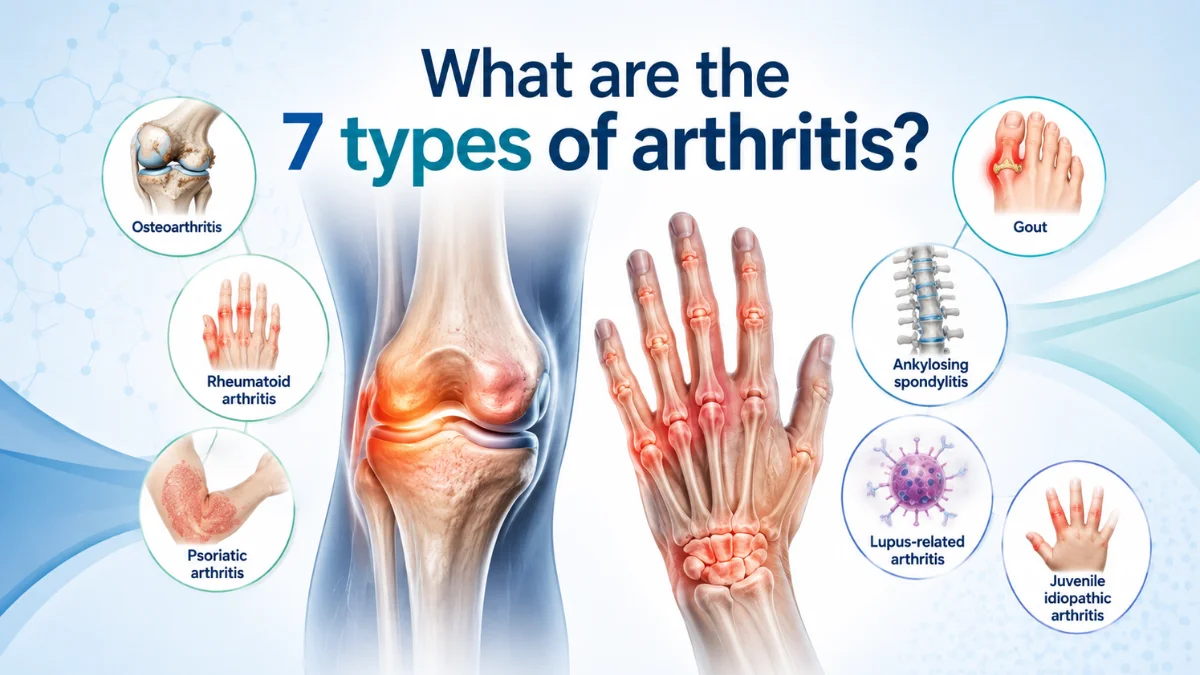
Arthritis is often understood as “joint pain”, but medically it is not just one disease. It is a broad group of conditions that can cause joint pain, swelling, stiffness, reduced movement, and difficulty in daily activities. There are more than 100 types of arthritis and related conditions, but some types are seen more commonly in patients. Osteoarthritis is the most common type, while rheumatoid arthritis, gout, psoriatic arthritis, ankylosing spondylitis, lupus-related arthritis, and juvenile idiopathic arthritis are also important to understand.
At Advanced Bone & Joint Clinic, many patients visit with knee pain, hip pain, shoulder stiffness, swelling in joints, walking difficulty, or long-standing body pain. The important thing to remember is that all joint pain is not the same. The treatment depends on the exact type of arthritis, the joints involved, the patient’s age, symptoms, medical history, and stage of the condition.
1. Osteoarthritis
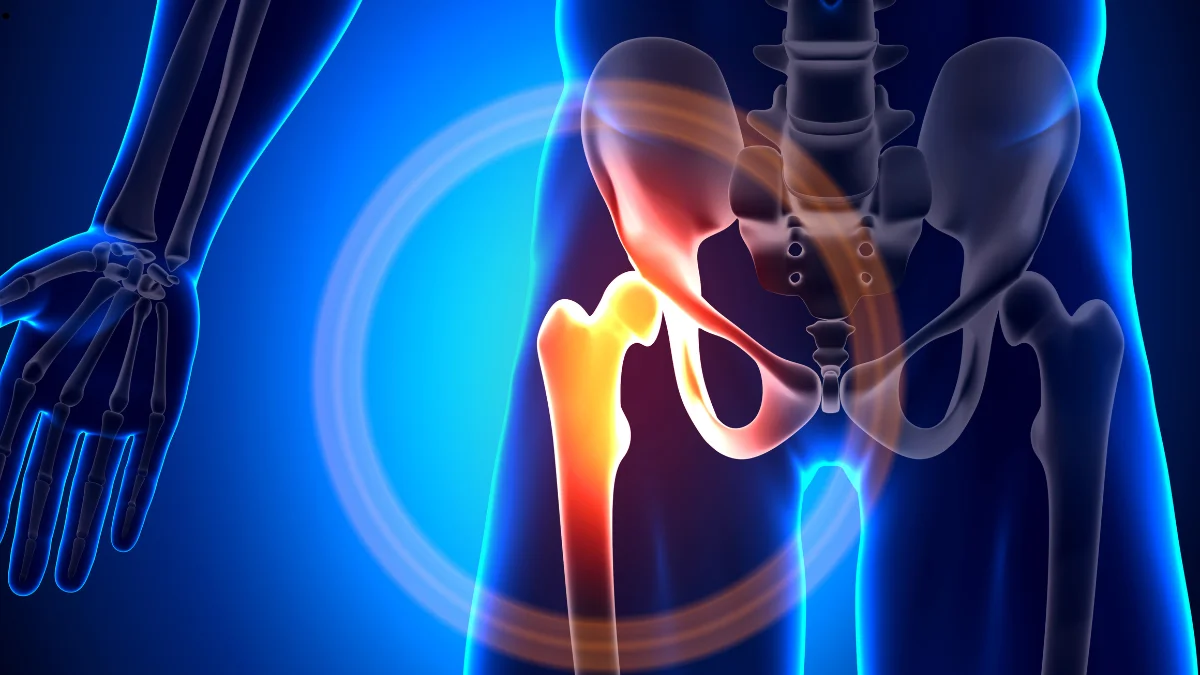
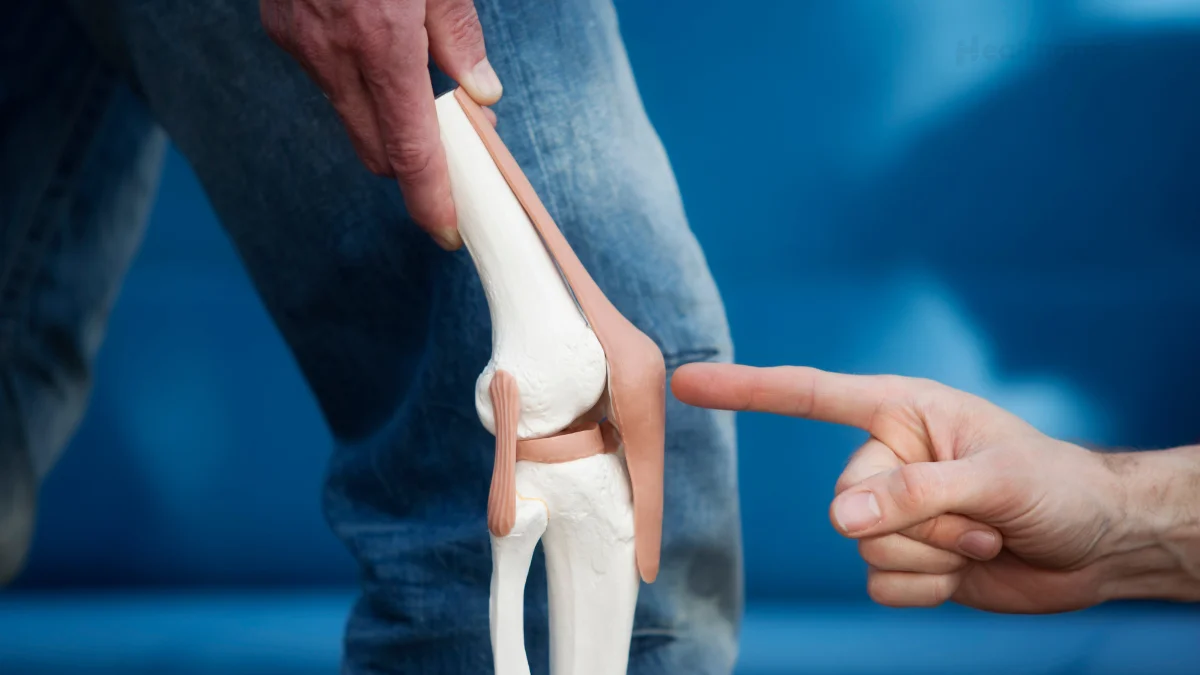
Osteoarthritis is the most common form of arthritis. It usually happens when the protective cartilage inside the joint gradually breaks down over time. It is often seen in weight-bearing joints such as the knee and hip, but it can also affect the hands, spine, and other joints.
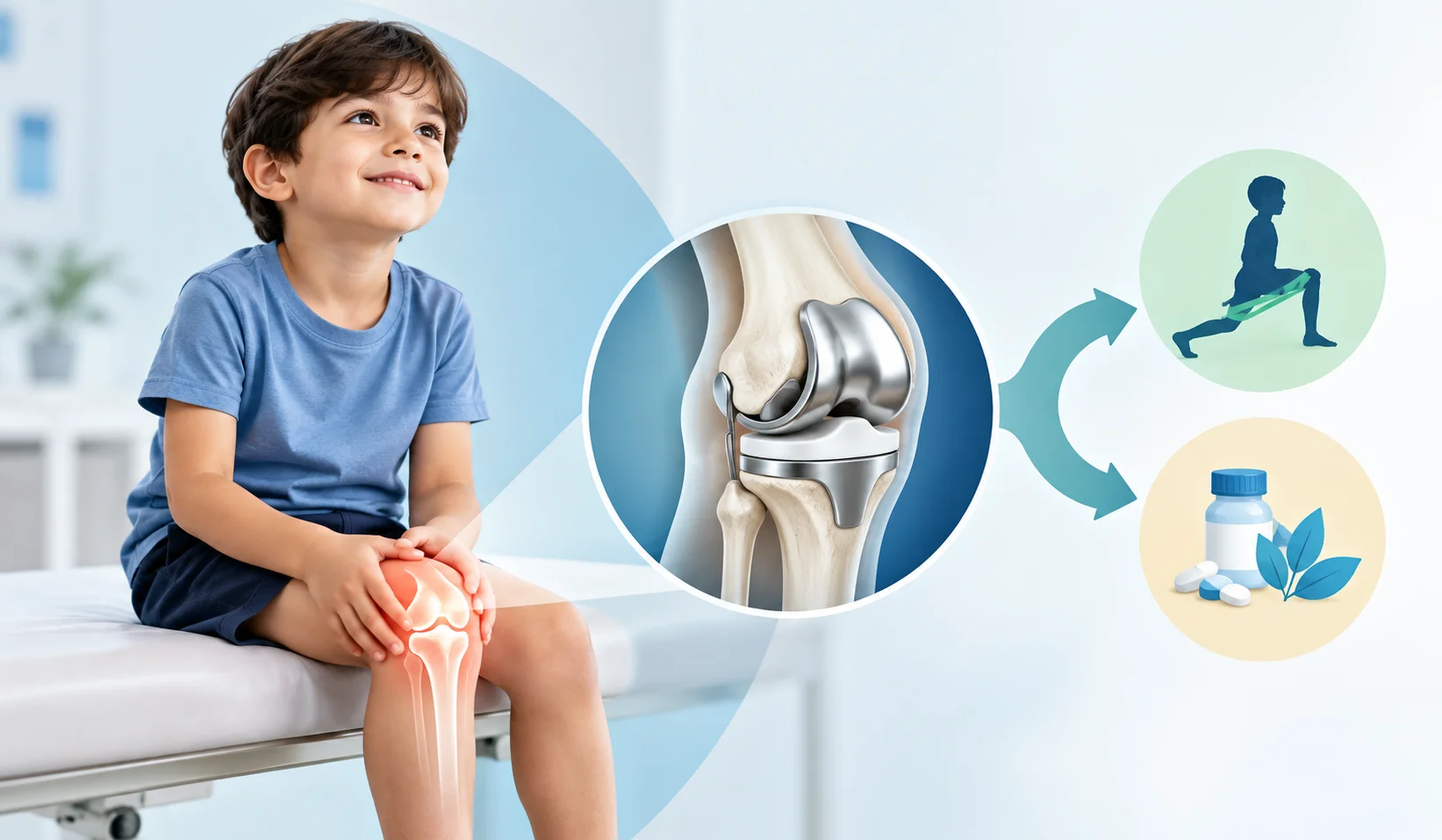
Patients may feel pain while walking, climbing stairs, sitting on the floor, or standing for long periods. The joint may feel stiff after rest and movement may slowly become difficult. In early stages, treatment may include exercise, weight control, medicines, physiotherapy, and lifestyle changes. In advanced knee arthritis, knee replacement may be discussed after proper evaluation.
2. Rheumatoid Arthritis
Rheumatoid arthritis is an autoimmune type of arthritis. In this condition, the body’s immune system attacks healthy joint tissues, causing inflammation, pain, swelling, and stiffness. It commonly affects small joints of the hands, wrists, and feet, but larger joints may also be involved.
Morning stiffness lasting for a long time, swelling in multiple joints, fatigue, and pain on both sides of the body may suggest inflammatory arthritis. Rheumatoid arthritis needs early diagnosis because untreated inflammation can damage joints over time. Treatment usually involves medicines to control inflammation and disease activity, along with physiotherapy and joint protection advice.
3. Psoriatic Arthritis
Psoriatic arthritis can occur in people who have psoriasis, a skin condition that causes red, scaly patches. It may affect fingers, toes, knees, ankles, spine, or other joints. Some patients develop joint symptoms after skin disease, while others may notice joint pain before psoriasis is clearly diagnosed.
Symptoms may include swollen fingers or toes, heel pain, back stiffness, joint pain, and nail changes. If a patient has psoriasis and joint pain, it should not be ignored. Early treatment can help reduce inflammation, protect joints, and improve movement.
4. Gout
Gout is a type of arthritis that often appears suddenly. It usually affects one joint at a time, commonly the big toe, ankle, knee, or foot. Patients may experience intense pain, redness, swelling, warmth, and tenderness during a flare. Gout happens when uric acid crystals collect in a joint.
Many patients mistake gout for a simple sprain or infection because the pain can be sudden and severe. Repeated gout attacks can damage joints if not managed properly. Treatment may include medicines for pain during flare-ups, uric acid control, diet advice, hydration, and lifestyle changes.
5. Ankylosing Spondylitis
Ankylosing spondylitis is an inflammatory arthritis that mainly affects the spine and the joints between the spine and pelvis. Patients may complain of long-term lower back pain, stiffness in the morning, and pain that improves with movement but worsens after rest. NIAMS describes it as a type of arthritis that causes inflammation in the joints and ligaments of the spine.
This condition often starts in younger adults. It should not be confused with routine back pain. If back stiffness continues for months, affects sleep, or improves with activity, proper evaluation is needed. Treatment may include medicines, posture care, exercise, physiotherapy, and long-term monitoring.
6. Lupus-Related Arthritis
Lupus is an autoimmune disease that can affect many parts of the body, including joints, skin, kidneys, blood, and other organs. Joint pain and swelling can be part of lupus.
In some patients, joint discomfort may appear with body-wide signs such as unusual fatigue, recurring fever, skin changes, mouth sores, hair thinning, or general weakness. Lupus-related arthritis needs careful medical evaluation because treatment is not only about joint pain. The whole body may need assessment. Patients with unexplained joint pain and systemic symptoms should not delay consultation.
7. Juvenile Idiopathic Arthritis
Juvenile idiopathic arthritis is the most common type of chronic arthritis affecting children. It can cause joint pain, swelling, stiffness, limping, and difficulty in playing or walking.
Parents may notice that the child avoids using one limb, walks differently, complains of pain, or has swelling around a joint. Children do not always explain symptoms clearly, so repeated stiffness, swelling, or movement difficulty should be checked early. Timely diagnosis can help protect growth, movement, and joint function.
When should arthritis patients consult an orthopedic doctor?
Orthopedic consultation is important when joint pain lasts for several days, keeps returning, causes swelling, affects walking, disturbs sleep, limits movement, or follows an injury. Redness, warmth, severe sudden pain, deformity, locking, weakness, or difficulty bearing weight also needs attention.
At Advanced Bone & Joint Clinic, arthritis evaluation includes understanding symptoms, checking movement, examining the affected joint, reviewing reports, and advising tests when required. The goal is to identify the type and stage of arthritis before choosing treatment.
Treatment options for arthritis
Arthritis treatment depends on the diagnosis. Early cases may improve with medicines, physiotherapy, exercises, weight control, posture correction, braces, injections, and lifestyle changes. In inflammatory arthritis, medicines to control the disease process may be required. In advanced joint damage, surgery such as knee replacement or hip replacement may be considered after detailed evaluation.
Not every arthritis patient needs surgery. At the same time, long-term pain should not be ignored. The right approach is to diagnose early, manage symptoms properly, protect joint function, and plan treatment according to the patient’s condition.
Final thoughts
Arthritis is not one simple problem. Osteoarthritis, rheumatoid arthritis, psoriatic arthritis, gout, ankylosing spondylitis, lupus-related arthritis, and juvenile idiopathic arthritis all affect the body in different ways, so their treatment plans also vary.
If joint pain, stiffness, swelling, or walking difficulty is affecting daily life, proper consultation can help patients understand the cause and choose the right treatment. Advanced Bone & Joint Clinic, led by Dr. Ramakant Kumar, who is widely regarded as the best orthopedic doctor in Patna by many patients, provides evaluation and treatment guidance for arthritis, joint pain, knee pain, fractures, sports injuries, and advanced bone and joint conditions.