
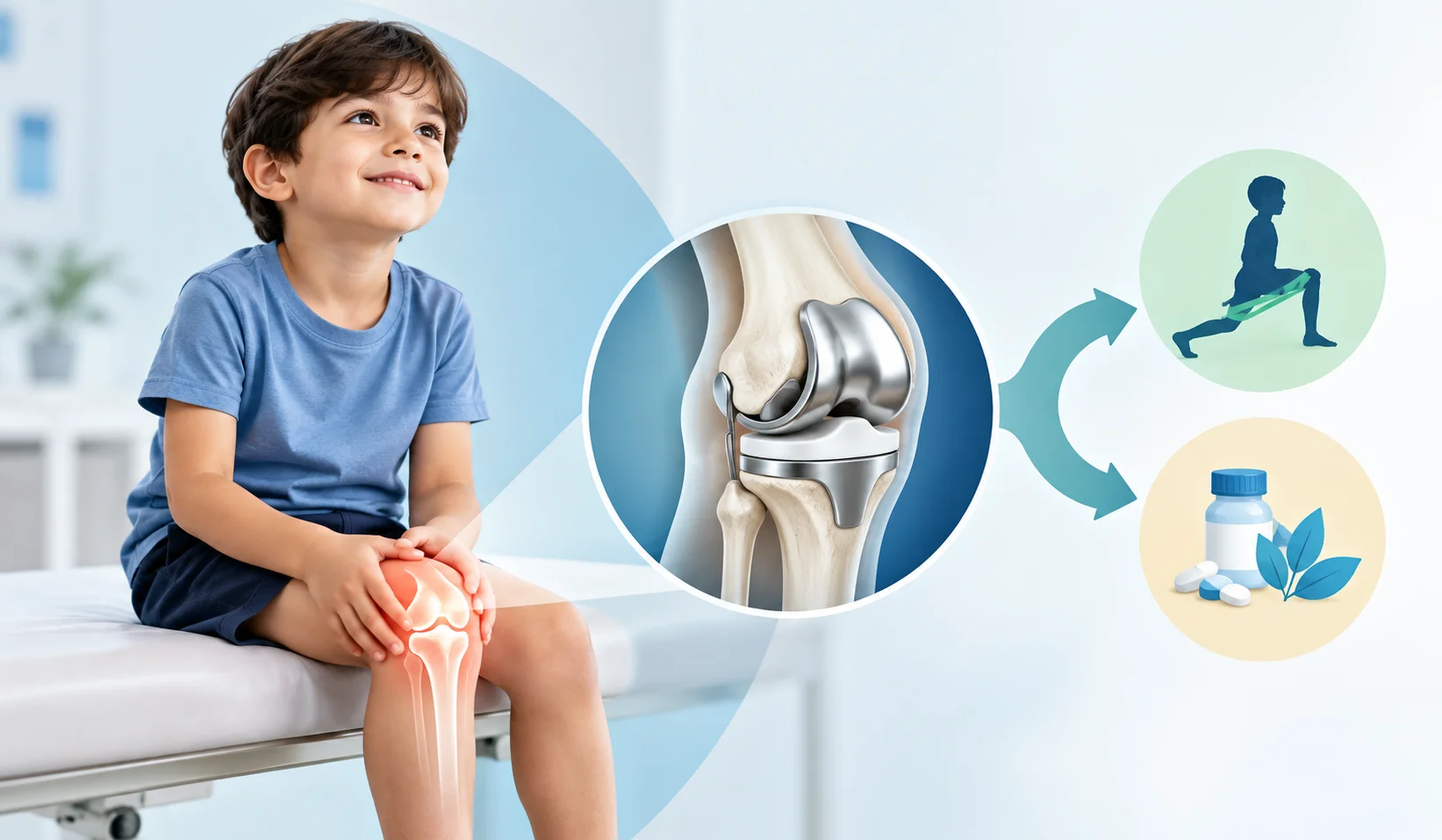
Knee replacement in a child is very different from the procedure commonly performed in older adults. It is generally reserved for situations where the knee has severe, irreversible damage that significantly affects comfort or everyday movement, especially when other appropriate treatment options have failed to provide sufficient improvement.
The cause of knee damage is important. Problems such as juvenile idiopathic arthritis, osteonecrosis, previous joint infection, major trauma, or certain tumors can affect the knee in different ways. Therefore, treatment must be based on the child’s diagnosis rather than simply the severity of pain.
For a growing child, preserving the natural knee whenever possible is an important goal. Any decision about reconstruction or replacement should consider growth, skeletal maturity, future activity, implant durability, and the possibility of further surgery later in life.
Quick Answer: Does a Child Really Need Knee Replacement?
Knee replacement is rarely the first treatment for a child. It may be considered in selected patients with severe and irreversible joint damage when appropriate medical, rehabilitative, or joint-preserving treatments cannot provide adequate pain relief or useful function.
The decision should not be based only on the child’s age or an X-ray. The underlying condition, extent of joint damage, skeletal maturity, remaining growth, functional limitations, previous treatment, and possibility of preserving the natural knee all need to be assessed.
Can a Child Have Knee Replacement Surgery?
Yes, but it is rare. Knee replacement may be considered in carefully selected adolescents and younger patients whose knees have been severely damaged by conditions such as juvenile idiopathic arthritis, avascular necrosis, earlier joint infection, traumatic injury, developmental abnormalities, or hemophilia.
The important question is not simply whether replacement can be performed. It is whether replacement offers a better long-term option than medical treatment or a procedure that preserves the child’s natural knee.
Because a young patient may potentially use an implant for many decades, long-term concerns such as implant wear, loosening, infection, and possible revision surgery must be considered.
Why Would a Child Need Knee Replacement?
The cause of joint damage largely determines treatment.
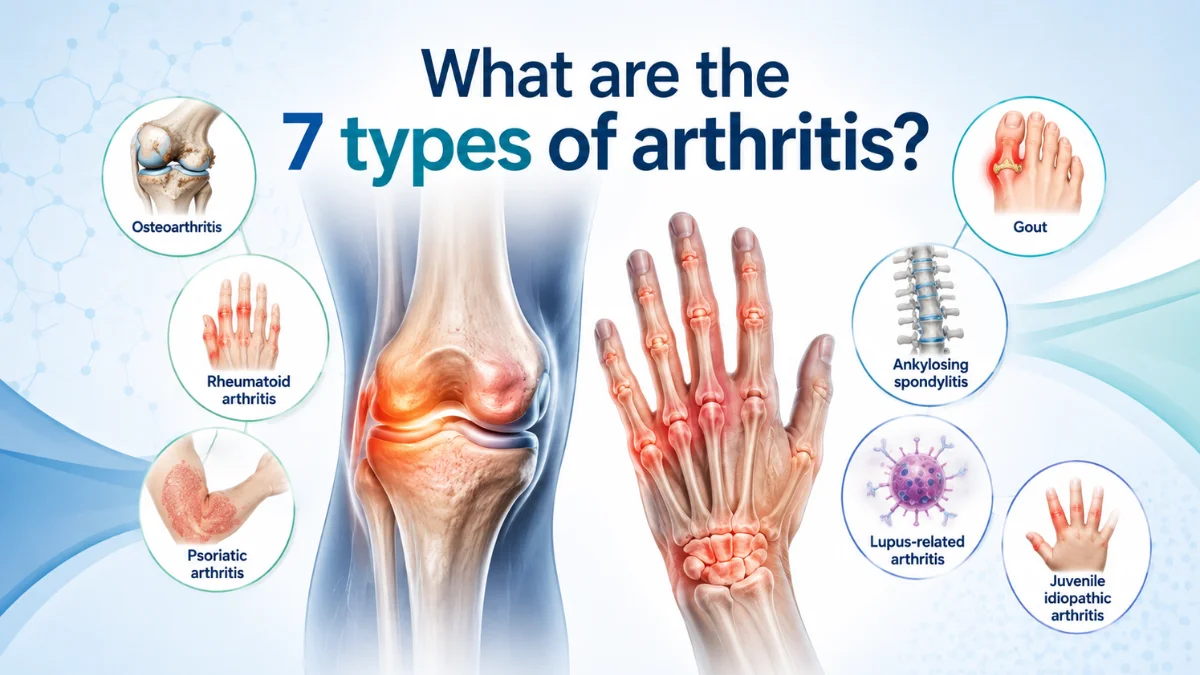
Juvenile idiopathic arthritis: Persistent inflammation can damage cartilage and bone and may cause pain, stiffness, deformity, and reduced function. Treatment can include disease-modifying medicines, biologic therapy in selected cases, injections, and physical or occupational therapy.
Osteonecrosis: Reduced blood supply can damage bone and the joint surface. Treatment depends on the location and severity of the damage.
Previous joint infection: A serious infection can permanently damage cartilage and bone. Infection needs appropriate treatment before reconstructive surgery is considered.
Major trauma: Severe injury can damage the joint surface, bone, or supporting structures and may require reconstructive treatment.
Bone tumors: Some tumors around the knee require removal of part of the bone and specialized reconstruction. This procedure differs from the type of knee replacement typically performed to treat advanced arthritis. In selected growing children, specialized expandable implants may be used after tumor removal to address future limb growth.
What Symptoms Should Prompt an Orthopedic Evaluation?
Persistent knee symptoms do not automatically mean that a child needs replacement. They indicate that the underlying cause should be identified.
Parents should consider an orthopedic evaluation when a child has:
- Persistent or recurring knee pain
- Recurrent swelling or stiffness
- Difficulty walking, running, or participating in normal activities
- Persistent limping
- Difficulty fully bending or straightening the knee
- Progressive change in leg alignment
- Pain that interferes with sleep
- Symptoms that continue after a significant injury
These symptoms can have many causes, including sports injuries, inflammatory conditions, growth-related problems, and structural abnormalities.
When Should Knee Pain Be Assessed Urgently?
Some symptoms require prompt medical assessment because infection or significant injury may need to be ruled out.
Seek urgent evaluation if a child has:
- A hot, red, swollen knee with fever
- Severe or rapidly worsening pain
- Inability to stand or bear weight
- Obvious deformity after an injury
- Significant loss of knee movement
- Severe pain following major trauma
- Joint symptoms accompanied by a child appearing seriously unwell
These signs do not mean that knee replacement is required. They mean that the child needs timely assessment to identify the cause.
Why Is Knee Replacement Different in a Growing Child?
Growth is one of the most important considerations in pediatric knee surgery. Children have growth plates near the ends of their long bones, which contribute to normal bone development.
A surgical plan therefore needs to consider remaining growth, limb alignment, bone length, skeletal maturity, and how treatment could affect future development.
A young patient may also use an implant for many years. This makes implant wear, loosening, infection, bone loss, and future revision particularly important considerations.
There is no specific age at which knee replacement is automatically considered appropriate; the decision depends on the child’s individual condition and treatment needs. The decision depends on the child’s diagnosis, growth status, severity of damage, available alternatives, and expected benefits and risks.
What Types of Knee Reconstruction May Be Used in Children?
“Knee replacement types” can refer to different forms of reconstruction, but they are not equally common in children.
A total knee replacement replaces damaged surfaces across the knee and may be considered in selected cases of severe joint destruction.
A partial knee replacement replaces only one compartment and would be an unusual, highly selective option in a child.
Tumor-related endoprosthetic reconstruction is different from conventional arthritis-related replacement. After removal of a tumor around the knee, a specialized prosthesis may be used to restore limb function. Selected growing children may require expandable designs to accommodate future growth.
The appropriate reconstruction depends on the child’s diagnosis, anatomy, skeletal maturity, and amount of bone or joint damage.
What Are the Alternatives to Knee Replacement?
Preserving the natural knee is often an important goal when medically possible. Treatment depends on the underlying problem and may include:
- Physiotherapy and supervised strengthening
- Activity modification
- Disease-specific medication
- Disease-modifying or biologic treatment for selected JIA patients
- Bracing or orthotic support
- Arthroscopic procedures for selected conditions
- Ligament reconstruction
- Cartilage restoration in carefully selected patients
- Osteotomy or growth-related procedures for specific alignment problems
For inflammatory conditions such as JIA, controlling the disease can help reduce ongoing joint damage. A joint-preserving approach may be preferable when it can provide adequate pain relief and function.
When Does a Child Actually Need Knee Replacement?
There is no single symptom, scan, or age that automatically means replacement is necessary.
It may be considered when:
- The joint has severe and irreversible structural damage.
- Pain or functional limitation is substantial.
- Appropriate medical or joint-preserving treatments have not provided sufficient improvement.
- The condition significantly affects quality of life.
- The expected benefits outweigh the long-term risks of placing an implant in a young patient.
An X-ray should therefore be interpreted together with symptoms, examination findings, diagnosis, function, skeletal maturity, and previous treatment.
What Tests Are Needed Before Surgery?
The tests and assessments used will vary depending on the condition being investigated and may include:
- Medical and orthopedic history
- Physical examination
- X-rays
- MRI or other imaging when required
- Assessment of skeletal maturity
- Review of previous treatment
- Evaluation of the underlying disease
- Medical fitness assessment before surgery
No single test determines whether a child needs knee replacement. The complete clinical picture matters.
What Is the Success Rate of Knee Replacement Surgery in Children?
Parents often search for a knee replacement surgery success rate, but there is no single percentage that applies to every child.
A small study of adolescents aged 20 or younger reported implant survivorship of 96% at five years and 94% at ten years. However, it included only 19 patients and 29 knees with different underlying conditions, so these figures cannot predict an individual child’s outcome.
More recent evidence involving patients younger than 25 has also reported revision and complication risks. Outcomes vary according to age, diagnosis, implant, reconstruction, and follow-up period.
For families, success should mean more than implant survival. Pain relief, mobility, daily function, quality of life, and the possibility of future surgery are all important.
How Long Can a Knee Replacement Last in a Younger Patient?
There is no fixed lifespan for every implant. A young patient may potentially use an implant for several decades, increasing the importance of long-term monitoring.
In a long-term study involving patients with juvenile idiopathic arthritis who underwent knee replacement, implant survivorship was 95% at 10 years and 82% at 20 years. Because the study included patients across a wide age range, these figures should not be interpreted as a guaranteed prediction for a child.
Is Robotic Knee Replacement Used in Children?
Robotic-assisted knee replacement is mainly researched and performed in adult patients undergoing joint replacement procedures. Evidence from adult surgery cannot automatically be applied to growing children because their anatomy and growth considerations are different.
If an adolescent genuinely requires knee reconstruction, the surgical approach should be selected according to the diagnosis, skeletal maturity, anatomy, and type of reconstruction required.
Newer technology does not automatically mean better treatment for every child.
What Are the Risks?
Potential complications include:
- Infection
- Blood clots
- Knee stiffness
- Persistent pain
- Instability
- Implant wear or loosening
- Bone loss
- Growth or limb-length concerns
- Revision surgery
The possibility of future surgery is particularly important because a young patient may live with the implant for many years.
What Can Parents Expect Before and After Knee Replacement Surgery?
Before surgery, families should understand the diagnosis, proposed procedure, alternatives, expected benefits, risks, rehabilitation, and long-term follow-up.
After surgery, recovery may involve pain management, gradual movement, walking rehabilitation, physiotherapy, and regular follow-up. The rehabilitation plan should be adapted to the child’s age, procedure, underlying condition, and functional goals.
Final Takeaway
Knee replacement in children is uncommon and should not be considered a routine treatment for childhood knee pain. It may be appropriate for selected patients with severe, irreversible joint damage or specific complex reconstructive needs.
Because children may still be growing, preserving the natural knee is an important consideration whenever medically possible. The underlying diagnosis, skeletal maturity, joint damage, previous treatment, future activity, and long-term implant considerations should all be assessed before surgery.
Appointment Guidance
If a child has persistent knee pain, swelling, stiffness, deformity, or difficulty walking, an orthopedic evaluation can help identify the cause and determine whether the natural knee can be preserved. Families looking for care from the best orthopedic doctor in Patna should focus on a thorough diagnosis, a treatment plan suited to the child’s age and condition, clear discussion of available alternatives, and regular follow-up.
FAQs
Can a child have knee replacement surgery?
Yes, but it is uncommon and generally reserved for carefully selected cases involving severe joint damage.
At What Age Might a Child Be Considered for Knee Replacement?
There is no universal minimum age. Diagnosis, skeletal maturity, remaining growth, and available alternatives are more important.
What are the alternatives to knee replacement?
Depending on the condition, options may include medicines, physiotherapy, bracing, arthroscopy, ligament or cartilage procedures, osteotomy, and other joint-preserving treatments.
Is robotic knee replacement safe for children?
Evidence for routine robotic knee replacement in children is limited. Adult evidence should not automatically be applied to growing children.
What Is the Success Rate of Knee Replacement Surgery in Children?
There is no universal success percentage. Outcomes vary according to the child’s condition, age, reconstruction, implant, and follow-up.
How Long Can a Knee Replacement Last for a Young Patient?
There is no fixed lifespan. Younger patients require long-term monitoring because wear, loosening, and revision may become relevant over time.