
As an orthopedic surgeon, one of the most common concerns I hear is: “Doctor, how painful is joint replacement really going to be?”
This fear is understandable, especially when we know from clinical research that up to 20% of people who undergo total knee replacement continue to experience some degree of pain or discomfort even months after surgery. But it is equally important to understand why this happens, who is at risk, and how modern surgical techniques and personalized pain management can dramatically improve outcomes.
In this article, I want to help you understand what joint replacement pain truly feels like at every stage — before surgery, during the procedure, and throughout recovery — so you know exactly what to expect and can make a confident, informed decision.
Is Joint Replacement A Painful Surgery?
Let me start with a clear, straightforward answer: you do not feel pain during the joint replacement surgery itself.
For knee replacement, hip replacement, shoulder replacement and other major joints, we typically use spinal or epidural anesthesia, sometimes combined with sedation, or full general anesthesia. In simple terms, either the lower half of your body is completely numb, or you are fully asleep. On top of that, we often use targeted nerve blocks that keep the operated area numb for several hours even after the procedure is over.
So although I am working on your bones, cartilage and soft tissues, your brain is not receiving pain signals during that time. What most patients actually remember about the operation day is not pain, but:
- The discussion before surgery
- The moment they are shifted to the operating room
- Waking up in the recovery room with a heavy or numb feeling around the operated limb
The real concern is rarely pain during surgery. It is the pain after joint replacement that people are worried about, and that is exactly where we now have much better control than we did a decade ago.
Also Read: Robotic vs Traditional Hip Replacement: 10 Reasons Patients Prefer Robotic Precision
How Painful Is Joint Replacement After Surgery? The First 72 Hours
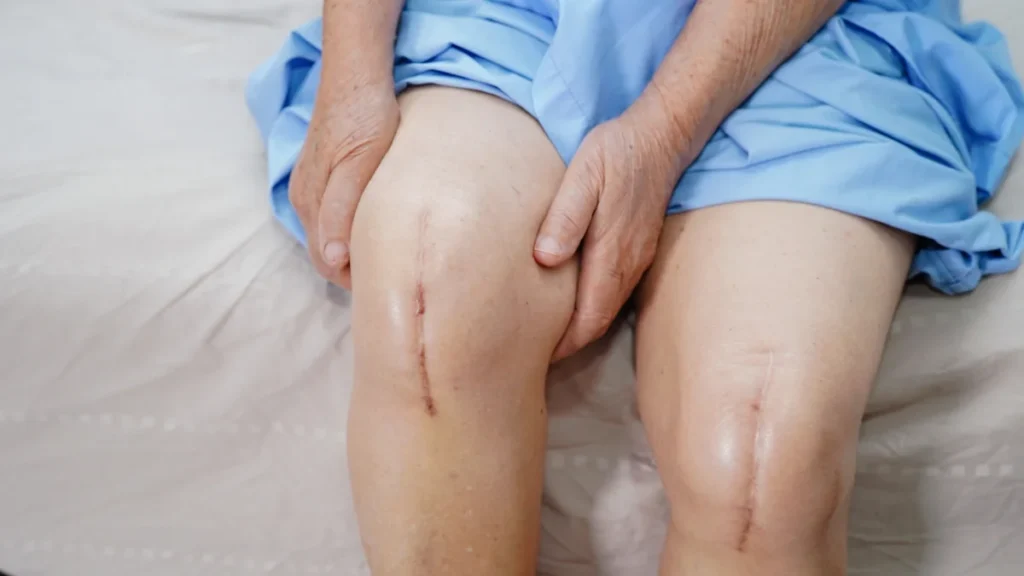
The first 2–3 days after surgery are when you become fully aware of your new joint, the incision, and the swelling. This is also the period when we pay very close attention to pain control and early mobilization.
In the first few hours after surgery, the effect of anesthesia and nerve blocks is still strong. Most patients describe the area as numb, heavy, or tight rather than intensely painful. There may be a dull ache or soreness, but we usually keep you on scheduled pain medication through an IV or tablets to prevent the pain from rising suddenly.
Once the anesthesia completely wears off in the first 24–48 hours, joint replacement pain becomes more noticeable, especially when you move. This is expected. Your body has just undergone a major reconstructive procedure. Bones have been cut and reshaped, ligaments and muscles have been handled, and a new implant has been placed. The tissues around the joint respond with inflammation and swelling as part of the healing process.
Patients often describe this phase using words like:
- Deep ache inside the joint
- Pulling or stretching around the incision
- Tightness when trying to bend or straighten the joint
With knee replacement pain, this tightness and deep ache are most obvious when you first try to bend the knee or put weight through the leg. With hip replacement pain, many people feel more discomfort when getting in and out of bed, turning in bed, or when they first stand and start walking.
What is important to understand is that this discomfort is time-limited and actively managed. You are not left to “tolerate” the pain. We combine different types of painkillers, nerve blocks, ice therapy, elevation, and carefully guided physiotherapy to keep you within a tolerable range. You should feel challenged during movements, but not tortured.
Also Read: What Are The Differences Between Major Surgery And Minor Surgery?
What Hurts The Most After Joint Replacement?
Most patients do not describe one single “worst pain”, but rather a combination of sensations that are new and unfamiliar. From my day-to-day practice, these are the areas that bother people the most after surgery:
First, the incision area. This is where the skin and superficial tissues have been cut and stitched. It is normal to feel soreness, burning, or pulling when you change position or when the dressing is adjusted. As long as the wound is healing well and there is no redness, discharge, or fever, this kind of pain is considered normal post-operative pain after joint replacement.
Second, the swelling and tightness inside the joint. After knee replacement, patients often tell me: “Doctor, it feels like my knee is stuffed and tight from inside.” That is the joint capsule and soft tissues reacting to surgery. When you try to bend the knee, the swelling pushes back, which gives a sensation of pressure and sometimes sharp twinges. In hip replacement, the tightness is felt more in the buttock and thigh, especially when you lift the leg or sit down on a low surface.
Third, there is muscle pain and stiffness. Muscles around the joint have been stretched and handled during surgery, and they now have to work in a new alignment. Thigh muscles after knee replacement, hip and buttock muscles after hip replacement, and shoulder and upper arm muscles after shoulder replacement all go through this adjustment phase. You feel this especially when you first sit up, stand, or take a few steps with support.
Finally, there is the emotional component of pain. Fear, anxiety, and over-focusing on every sensation can amplify how intense the pain feels. That is why I always prefer to explain the recovery process in detail before surgery. When you know that the pulling, heaviness, and stiffness are expected and temporary, you handle them much better psychologically.
The key point is this: joint replacement is not a pain-free experience, but with modern protocols, joint replacement pain is usually controllable, steadily decreasing, and far less frightening than what most patients imagine before surgery.
How Long Does Joint Replacement Pain Last? A Clear Recovery Timeline Patients Can Trust
Once the first 72 hours pass, most patients want to know one thing: “How long will this pain continue?”
The answer is not the same for everyone, but after treating thousands of patients, I can confidently say that joint replacement pain follows a predictable and reassuring pattern.
Week 1: Healing Begins, Pain Is Manageable With Support
During the first week, discomfort is present, but it does not stay constant. It rises slightly during movement and settles when you rest. You may still feel tightness inside the joint, soreness around the incision, and heaviness when you stand. This is also the time when your physiotherapist begins gentle exercises to prevent stiffness.
What surprises many people is that, by the end of the first week, most patients can sit on a chair, use the washroom with help, and walk short distances with a walker. The pain is not gone, but it becomes predictable and much less frightening.
Week 2 to Week 4: Pain Gradually Reduces, Stiffness Becomes the Main Issue
By the second week, most patients notice that the sharpness of the pain has reduced. The discomfort shifts more toward stiffness, especially in knee replacement patients. Bending and straightening the knee may still feel challenging, but the intensity of pain during basic movements is noticeably lower.
For hip replacement patients, progress tends to be faster. Many walk more comfortably, sleep better, and feel confident with routine movements. Shoulder replacement patients regain controlled, mid-range arm elevation with less discomfort.
In this phase, pain medicines are reduced gradually, and patients rely more on physiotherapy and movement to stay comfortable.
6 to 8 Weeks: Daily Activities Become Easy, Pain Levels Drop Sharply
This is the stage where patients begin to appreciate the real benefit of joint replacement. Walking around the house, using stairs with support, getting in and out of a car, and standing for longer periods all become much easier.
The old, arthritic pain is gone. What remains is mild soreness after physiotherapy sessions or at the end of a long day. Almost every patient at this stage tells me the same thing:
“Doctor, I’m so much better than I was before surgery.”
3 Months: Major Pain Has Settled in Most Patients
At the 3-month mark, pain becomes minimal for the majority of people. You may still feel minor stiffness in the mornings or slight discomfort during deep bending, but these sensations improve with consistent exercises and movement.
Daily life returns to near-normal:
- Walking outdoors
- Basic household chores
- Returning to a desk job
- Driving (for many patients)
- Light strengthening exercises
6 to 12 Months: Complete Healing and Confidence
Although daily life becomes comfortable much earlier, the internal tissues continue to heal for several months. By 6 to 12 months, the replaced joint feels natural, strong, and stable. You rarely think about pain at this point.
This timeline may vary slightly depending on whether you underwent a knee, hip, or shoulder replacement, but the progression described above reflects what I consistently observe in my practice.
Modern Pain Management Approaches That Reduce Discomfort Dramatically
Pain management during joint replacement has evolved significantly. Today, we use a layered, scientifically planned approach that keeps discomfort controlled without relying too heavily on strong medications.
1. Preemptive Techniques Before Surgery
Before surgery even begins, we administer medications that reduce nerve sensitivity and calm the body’s inflammatory response. This helps ensure that pain signals are much weaker in the early recovery period.
2. Advanced Anesthesia Techniques
Nerve blocks play a major role in keeping joint replacement pain under control. For instance, knee replacement patients benefit from femoral nerve or adductor canal blocks, while hip replacement patients receive highly targeted pericapsular blocks. Shoulder replacement patients receive an interscalene block, which keeps the upper arm comfortable for many hours. These techniques help patients wake up with minimal discomfort.
3. Local Pain Infiltration During Surgery
During the procedure, we place medication directly around the joint capsule and soft tissues. This reduces the need for high doses of oral painkillers later and keeps post-operative discomfort predictable and controlled.
4. Scheduled Pain Medication
Instead of waiting for pain to rise, we use medications on a fixed schedule. This keeps pain levels stable and prevents episodes of severe discomfort. In most cases, medicines are gradually reduced as the patient becomes more active.
5. Ice Therapy, Elevation, and Positioning
Ice packs or cold therapy systems help reduce swelling around the operated joint, while proper positioning—especially for hip and knee replacement patients—minimizes pressure and improves comfort.
6. Early, Gentle Movement
Movement plays an unexpectedly large role in pain management. When you walk, bend, and stretch under supervision, the joint becomes more flexible, swelling reduces, and pain naturally decreases. Many patients are surprised by how much relief they feel simply by staying active within safe limits.
The combination of these approaches ensures that while joint replacement involves discomfort, it is rarely overwhelming when managed correctly.
Must Read: What Foods Are Good to Eat When Your Gallbladder Is Acting Up?
When Pain After Joint Replacement Is Not Normal

Although most discomfort is expected and improves steadily, there are situations when pain signals the need for medical evaluation. A sudden increase in pain after a period of improvement, unusual redness or warmth around the incision, persistent fever, new calf swelling, or difficulty bearing weight all require prompt attention. These symptoms can indicate infection, blood clots, or implant issues, and early intervention is essential for safety.
When Can You Walk After Joint Replacement? What Patients Can Expect
One of the most reassuring moments for patients is discovering how quickly they can stand and walk after surgery. With modern surgical techniques, you are encouraged to walk within 24 hours in nearly all hip and knee replacement cases. I do this not to rush you, but because early movement prevents stiffness, reduces swelling, improves circulation, and gives you immediate confidence in your new joint.
Walking After Knee Replacement
Most knee replacement patients stand with support on the same day or the next morning. The first few steps may feel strange — the joint is swollen, your muscles are adjusting, and you are learning to trust a completely new knee. But the fear disappears quickly once you realize the joint is stable and secure. Walking short distances in the room or corridor becomes easier each day.
Walking After Hip Replacement
Hip replacement patients often walk even more comfortably in the early phase. Once the initial soreness settles, weight-bearing feels natural. Many patients walk the length of the hospital corridor before discharge. Most of the discomfort comes from incision soreness and muscle stiffness, not the joint itself.
Walking After Shoulder Replacement
While shoulder replacement does not involve walking challenges, patients regain comfortable arm movements over time. The discomfort is more noticeable when lifting the arm or reaching out, especially in the first few weeks.
Walking early is not just encouraged…it is one of the most reliable ways to reduce joint replacement pain in the long run.
Practical Tips to Reduce Pain Faster After Joint Replacement
Your recovery is not just about surgery — it is about the daily habits that help your new joint settle into place. These are the same strategies I personally advise my patients to follow:
1. Take Your Pain Medicines on Time
Many people make the mistake of waiting until the pain becomes intense. Scheduled medicines keep discomfort in a steady, manageable range and prevent spikes that can slow your progress.
2. Use Ice Packs Correctly
Ice reduces swelling, and swelling is one of the biggest contributors to joint replacement pain. Applying ice for 15–20 minutes a few times daily makes a noticeable difference in comfort.
3. Elevate the Limb (For Hip and Knee Patients)
Keeping the leg raised above heart level helps reduce pressure inside the joint capsule, decreases swelling, and improves comfort while resting.
4. Stick to Your Physiotherapy Plan
Inconsistent exercise is the leading cause of prolonged stiffness. Physiotherapy is not meant to torture you — it is designed to help your joint regain its full range of motion. Even gentle exercises, when done regularly, make the pain decrease more quickly.
5. Maintain Good Sleep Positions
Your sleeping posture affects your recovery more than you may realize.
- Hip replacement patients must avoid crossing their legs.
- Knee replacement patients benefit from placing a pillow under the ankle, not the knee.
Comfortable positioning reduces night-time pain and helps you sleep better.
6. Avoid Overexertion
Walking too much too soon or pushing yourself beyond what your body can handle often increases swelling and pain. Slow, steady progress is far more effective than sudden bursts of effort.
7. Keep Yourself Hydrated and Well-Nourished
Tissues heal better when your body receives adequate hydration and nutrients. Simple choices like drinking plenty of water and including protein-rich foods support recovery and reduce inflammation naturally.
These steps may seem small, but together they create a smoother, faster, and much less painful recovery experience.
FAQs About Joint Replacement Pain
Patients often search for clear, honest answers before committing to surgery. Here are the questions I am asked most frequently in my clinic.
Is joint replacement the most painful surgery?
It is challenging, but not the most painful surgery. With modern anesthesia, nerve blocks, and structured pain medication, discomfort stays well within a manageable range for the majority of patients.
Why do people say knee replacement is painful?
Knee replacement involves a large range of motion, and bending the knee against swelling can feel intense in the early days. However, with consistent physiotherapy, knee pain reduces significantly within a few weeks.
Is hip replacement less painful than knee replacement?
Yes, in most cases hip replacement patients experience a smoother and less painful recovery. The hip joint does not require as much bending in the early phase, so soreness is generally minimal compared to the knee.
How long does joint replacement pain last?
Most patients experience improving pain within the first week, significant relief by 4–6 weeks, and minimal discomfort by 3 months. Full internal healing can take 6–12 months.
Will I need strong painkillers?
Not always. We use a multimodal approach that reduces the need for opioids. Many patients manage well with anti-inflammatory medicines and nerve-pain medication.
When should I worry about pain?
Sudden worsening of pain, redness around the incision, fever, calf swelling, or difficulty bearing weight require immediate evaluation. These symptoms may indicate complications that must be addressed quickly.
You May Like: Can Decayed Teeth Cause Health Problems?
Conclusion
If you are considering joint replacement, the fear of pain is natural. But in my clinical experience, the reality is far more reassuring than the imagination. The surgery itself is painless, the early discomfort is controlled with modern techniques, and the recovery follows a steady, predictable improvement curve.
Most importantly, the pain you experience after joint replacement is temporary. The relief you gain — the ability to walk, climb stairs, sleep comfortably, and live without constant joint pain — lasts for years. Patients consistently tell me that the short period of surgical discomfort is a small price to pay for the freedom they regain.
Your journey does not end with surgery — it begins there, and my role as your orthopedic surgeon is to guide you through every step with clarity, comfort, and confidence.