


Seeing blood in stool can be worrying, especially when it happens suddenly. Some people notice fresh red blood on toilet paper. Some see drops of blood in the toilet bowl. Others may notice black stool, blood in the stool, pain during a stool, constipation, diarrhea, weakness, or stomach discomfort.
The first thought is often, “Is it piles?” In many cases, bleeding may be due to hemorrhoids or a fissure. But blood in stool should not be treated only by guesswork. It is a symptom, not a final diagnosis. Sometimes the cause is minor and treatable, but in other cases, it may be linked with infection, inflammation, polyps, ulcers, or colon-related disease.
The safest approach is to understand the pattern of bleeding, look for warning signs, and get medical evaluation when needed. Finding the actual reason behind rectal bleeding helps avoid unnecessary fear, delayed treatment, and repeated self-medication.
What Does Blood in Stool Look Like?
Blood in stool does not look the same in every person.The way the blood appears may help the doctor understand where the problem could be, but the real cause can be confirmed only after proper medical assessment.
You may notice blood in different ways, such as:
- Bright red blood on toilet paper
- Blood drops after passing stool
- Blood coating the outside of stool
- Blood mixed with stool
- Dark red or maroon-colored stool
- Black, sticky, foul-smelling stool
- Mucus with blood
- Painful bleeding during stool
- Painless bleeding after stool
Bright red blood usually suggests bleeding from the lower part of the digestive tract, such as the anus, rectum, or lower colon. This may happen in piles, fissure, rectal inflammation, or other lower bowel conditions.
Black stool needs more attention, especially if it is sticky and foul-smelling. It may suggest bleeding from the upper digestive tract, such as the stomach or small intestine. If black stool is associated with dizziness, weakness, vomiting, or abdominal pain, medical care should not be delayed.
The pattern also matters. Blood only on wiping may point toward piles or fissure, especially when there is constipation or pain during stool. But blood mixed with stool, repeated rectal bleeding, or bleeding with weight loss, anemia, or bowel habit changes needs proper investigation.
Common Causes of Blood in Stool
There are many causes of blood in stool. Some are common and manageable, while others need timely diagnosis. The important point is that every bleeding episode should not automatically be blamed on piles.
Hemorrhoids or Piles
Hemorrhoids, commonly called piles, are swollen blood vessels around the anus or inside the rectum. They are one of the most common causes of fresh rectal bleeding.
Hemorrhoids symptoms may include bright red blood after stool, itching around the anus, swelling, discomfort, or a soft lump near the anal opening. Internal hemorrhoids may cause painless bleeding, especially after passing hard stool or sitting on the toilet for too long.
However, even if piles are present, they may not always be the only cause of bleeding. If bleeding keeps coming back, is mixed with stool, or comes with stomach pain, weakness, weight loss, anemia, or change in bowel habits, further evaluation is important.
Anal Fissure
An anal fissure means a tiny tear develops in the skin around the anus, usually after passing hard stool or straining. It usually happens due to hard stool, constipation, repeated straining, or passing large stool.
Fissure-related bleeding is usually fresh red in color. It may appear on toilet paper or on the surface of stool. The most common sign is sharp pain during stool, often followed by burning or discomfort for some time after passing stool.
In many people, fissure keeps recurring because constipation is not corrected. Blood in stool treatment in such cases focuses on softening stool, reducing pain, healing the cut, and preventing repeated injury.
Constipation and Straining
Constipation is one of the most common reasons behind piles and fissure-related bleeding. It is not only about passing stool less often. Hard stool, incomplete evacuation, repeated pressure, and sitting too long in the toilet can all strain the anal and rectal area.
This pressure may cause fresh bleeding or worsen existing hemorrhoids. Many people notice blood after a few days of hard stool or after pushing too much during bowel movement.
Simple constipation may look harmless, but if it becomes frequent and is associated with bleeding, bloating, stomach pain, or change in stool pattern, it should be checked properly.
Infection or Gut Inflammation
Blood in stool with loose motion, fever, cramps, mucus, or urgency may suggest infection or inflammation in the intestine. This may happen after contaminated food or water, or due to other intestinal conditions.
In such cases, taking antibiotics on your own is not a safe idea. Some infections need stool testing and specific medicines, while some improve with hydration and supportive care. Taking the wrong medicine may delay recovery or worsen symptoms.
Medical advice is important if you have:
- Bloody diarrhea
- Fever with stool changes
- Severe stomach cramps
- Dehydration
- Weakness
- Blood and mucus in stool
- Repeated loose motion with bleeding
Inflammatory Bowel Disease
Inflammatory bowel disease, mainly ulcerative colitis and Crohn’s disease, can also cause rectal bleeding. These are long-term inflammatory conditions of the intestine and need proper gastroenterology care.
People with inflammatory bowel disease may have repeated blood in stool, loose motion, mucus, abdominal cramps, urgency to pass stool, weakness, weight loss, and low hemoglobin. Symptoms may improve for some time and then return, so many people delay treatment.
IBD is not the same as simple indigestion, piles, or infection. It needs correct diagnosis, regular follow-up, and long-term treatment planning.
Polyps or Colon Cancer
Blood in stool can sometimes be linked with colon polyps or colon cancer. This does not mean every person with bleeding has cancer, but it is one reason repeated bleeding should never be ignored.
Colon cancer symptoms may include blood in stool, change in bowel habits, constipation or diarrhea lasting for several days, narrow stool, feeling that the bowel is not empty, stomach pain, unexplained weight loss, weakness, fatigue, or anemia.
The purpose of evaluation is not to scare the patient. The purpose is to find the correct cause early. If the cause is simple, treatment can begin quickly. If there is a serious condition, early diagnosis can help in better treatment planning.
Is Blood in Stool Always Due to Piles?
No. Piles are common, but they are not the only cause of blood in stool. This is one of the biggest reasons people delay care. They see fresh blood, assume it is hemorrhoids, buy creams or tablets, and keep postponing evaluation.
Rectal bleeding can happen due to fissure, infection, inflammation, ulcers, polyps, diverticular disease, inflammatory bowel disease, or colon cancer. Sometimes a person may have piles and another bowel condition at the same time.
You should be more careful if bleeding is:
- Recurrent
- Painless
- Mixed with stool
- Associated with mucus
- Linked with stomach pain
- Happening with weakness or anemia
- Associated with weight loss
- Seen with change in bowel habits
If you are unsure whether bleeding is due to piles or something else, it is better to consult a gastroenterologist for proper diagnosis instead of relying on guesswork.
Warning Signs: When You Should See a Gastroenterologist
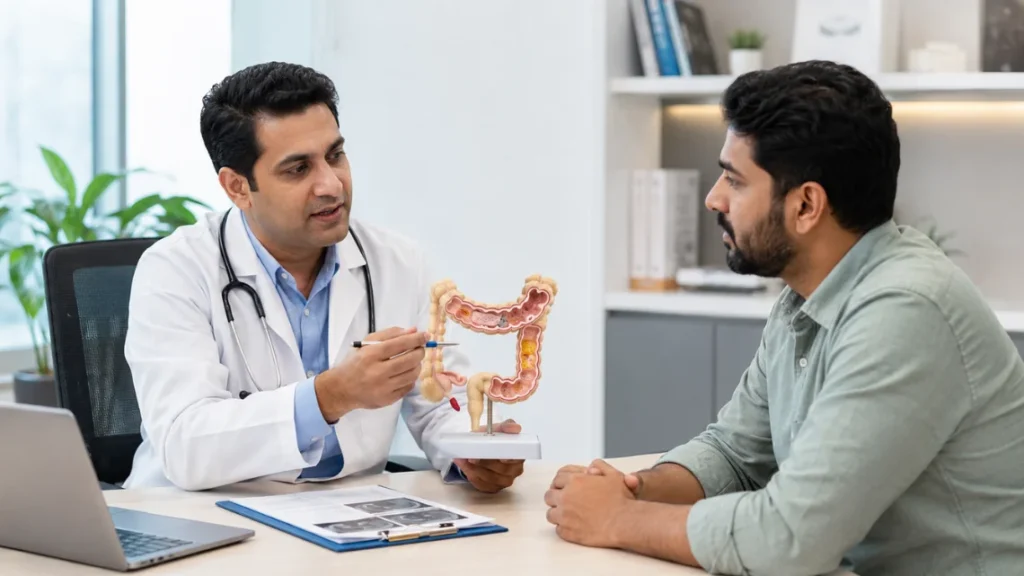
A small amount of fresh blood after hard stool may sometimes happen with piles or fissure. But rectal bleeding should not be taken lightly when it happens repeatedly or comes with other symptoms.
You should see a gastroenterologist if you notice blood in stool more than once, bleeding that continues for more than 1-2 days, black or tarry stool, blood mixed with stool, repeated painless bleeding, stomach pain, fever, mucus, or bowel habit changes.
Medical evaluation is also important if bleeding is associated with persistent constipation, diarrhea, narrow stool, unexplained weight loss, weakness, dizziness, low hemoglobin, or a family history of colon cancer.
Heavy bleeding, fainting, severe weakness, black stool, vomiting blood, or severe abdominal pain needs urgent medical care. These symptoms may suggest significant bleeding or a serious digestive condition.
People above 45 years of age should be especially careful with new rectal bleeding or unexplained change in bowel habits. Younger people should also not ignore bleeding if it is repeated, mixed with stool, or associated with pain, diarrhea, weight loss, or anemia.
Blood in Stool and Colon Cancer Symptoms: What Patients Should Know
Blood in stool does not always mean colon cancer. In many people, bleeding happens due to piles, fissure, infection, or inflammation. But colon cancer can sometimes cause visible or hidden bleeding.
This is why repeated bleeding needs proper evaluation. The goal is not to assume the worst. The goal is to rule out serious causes and treat the correct condition early.
Possible colon cancer symptoms include:
- Blood in stool
- Change in bowel habits
- Constipation or diarrhea lasting for several days
- Narrow stool
- Feeling that the bowel is not fully empty
- Stomach pain or cramps
- Weakness or fatigue
- Unexplained weight loss
- Low hemoglobin or iron deficiency anemia
Some people may not have severe pain in the beginning. Others may only notice weakness, anemia, stool changes, or occasional bleeding. This is why symptoms should be seen together, not separately.
If blood in stool occurs along with bowel habit changes, weight loss, weakness, anemia, or a family history of colon cancer, medical evaluation should not be delayed.
How a Gastroenterologist Diagnoses the Cause of Blood in Stool
Diagnosis starts with understanding the symptoms properly. A gastroenterologist looks at where the bleeding may be coming from, how serious it appears, and what tests may be needed based on the patient’s condition.
The doctor may ask when the bleeding started, what color the blood is, whether it appears on wiping or is mixed with stool, whether stool is hard or loose, and whether there is pain, mucus, fever, weakness, or weight loss.
Depending on symptoms and examination, tests may include blood tests, stool tests, proctoscopy, sigmoidoscopy, or colonoscopy.
Colonoscopy helps examine the large intestine from inside. It may help detect hemorrhoids, inflammation, ulcers, polyps, growths, or the source of bleeding. It is not required for every patient with blood in stool, but it becomes important when bleeding is recurrent, unexplained, mixed with stool, or linked with warning signs.
A proper diagnosis prevents two common problems: unnecessary fear and unnecessary delay. Once the cause is clear, treatment can be planned more safely.
Blood in Stool Treatment Depends on the Cause
There is no single treatment for blood in stool because bleeding can happen for different reasons. Taking piles medicine without diagnosis may give temporary relief if piles are the actual cause, but it can delay treatment if bleeding is due to another condition.
Blood in stool treatment may include fiber, stool softeners, medicines, sitz bath, and lifestyle changes for hemorrhoids. Fissure treatment may focus on constipation control, pain relief, local medicines, and stool softening. Infection may need hydration, stool testing, and medicines based on the cause. Inflammatory bowel disease needs long-term gastroenterology care. Polyps may need removal during colonoscopy, while colon cancer requires further testing and specialist treatment planning.
People should avoid self-starting antibiotics, painkillers, blood-stopping medicines, or repeated piles creams without medical advice. These may hide symptoms for some time but may not treat the actual cause.
Treatment works best when it is based on the source of bleeding, not only on the appearance of blood.
What You Can Do Before the Appointment
Before visiting a doctor, try to observe the symptoms clearly. This helps the doctor understand the pattern faster and decide what evaluation may be needed.
Note these details before your visit:
- When bleeding started
- How many times it happened
- Color and amount of blood
- Whether blood is on wiping, dripping, coating stool, or mixed with stool
- Whether stool is hard, loose, black, or narrow
- Pain during or after stool
- Constipation, diarrhea, mucus, fever, or abdominal pain
- Weakness, dizziness, weight loss, or loss of appetite
- Any medicines you are taking
- Past history of piles, fissure, ulcer, liver disease, or colonoscopy
Stay calm, but take repeated bleeding seriously and get it checked instead of waiting for it to settle on its own. Also, avoid taking random medicines before evaluation, especially antibiotics, painkillers, or medicines to stop bleeding unless prescribed.
Conclusion
Blood in stool should never be ignored or treated only by guessing. It may be due to hemorrhoids, fissure, constipation, infection, inflammation, polyps, or serious colon-related disease. The appearance of blood can give clues, but it cannot confirm the actual cause.
If bleeding happens once after hard stool, monitor it carefully. But if it repeats, is mixed with stool, comes with pain, diarrhea, constipation, weakness, weight loss, black stool, or bowel habit changes, proper evaluation is important.
Treatment should be planned only after understanding where the bleeding is coming from and why it is happening. Early diagnosis can help reduce complications, avoid unnecessary fear, and guide you toward the correct blood in stool treatment.
When to Seek Expert Care
For repeated blood in stool, rectal bleeding, black stool, painful stool, constipation with bleeding, anemia, or bowel habit changes, consulting a qualified gastroenterologist can help identify the actual cause and guide the right treatment.
If you are looking for the best gastroenterologist in Patna for digestive symptoms, bleeding concerns, or colon-related evaluation, timely consultation can help avoid unnecessary delay.Based on the patient’s symptoms, bleeding history, age, and risk factors, the doctor may suggest an endoscopy test in Patna, colonoscopy, or other tests to find the source of bleeding.
FAQs
1. Is blood in stool always serious?
Blood in stool is not always serious, but it should not be ignored. It may happen due to piles or fissure, but repeated bleeding can also be linked with infection, inflammation, polyps, or colon-related disease.
2. How do I know if blood in stool is due to piles?
Hemorrhoids symptoms often include bright red blood after stool, itching, swelling, discomfort, or a lump near the anus. However, other conditions can cause similar bleeding, so repeated rectal bleeding should be checked.
3. When should I worry about rectal bleeding?
You should worry if bleeding is repeated, heavy, black in color, mixed with stool, or associated with stomach pain, weight loss, anemia, weakness, fever, diarrhea, or change in bowel habits.
4. Can blood in stool be a colon cancer symptom?
Yes, blood in stool can be one of the colon cancer symptoms, especially when it occurs with bowel habit changes, unexplained weight loss, weakness, anemia, or narrow stool. But not every bleeding case is cancer.
5. Which test is needed for blood in stool?
The test depends on symptoms. A gastroenterologist may advise blood tests, stool tests, proctoscopy, sigmoidoscopy, colonoscopy, or upper digestive evaluation depending on the bleeding pattern and warning signs.
6. Can constipation cause blood in stool?
Yes. Constipation can cause hard stool and straining, which may lead to fissure or hemorrhoids. If bleeding repeats or happens with pain, weakness, black stool, or bowel habit changes, it should be evaluated.